
Cancer S#cks.
A Six-Part Series on Early Detection
PART 5
Why Haven't We Cured Cancer?
Valerie S. | 9/2/26 | 5 min
We've Spent Billions. So Why Is Cancer Still Here?
We've put people on the moon.
We've mapped the human genome.
We've developed medicines that would have seemed like science fiction just a generation ago.
For decades, brilliant scientists, physicians and researchers around the world have devoted their careers to cancer research.
Billions upon billions of dollars have been spent.
So, it's reasonable to ask:
Why haven't we cured cancer?
The answer begins with something many people don't realize.
Cancer isn't one disease.
"Cancer" Is Actually a Lot of Different Diseases
When we say someone has cancer, it sounds like we're describing a single illness.
We're not.
According to the National Cancer Institute, there are more than 100 different types of cancer.
Breast cancer is different from pancreatic cancer.
Pancreatic cancer is different from leukemia.
Leukemia is different from melanoma.
And it gets even more complicated.
Two people can have cancer in the same organ—and their tumors may have different genetic changes, behave differently and respond differently to treatment.
In other words, researchers aren't trying to solve one enormous puzzle called cancer.
They're trying to solve hundreds of puzzles—and some of the pieces keep changing.
Cancer Is Surprisingly Good at Surviving
Cancer begins with our own cells.
That's part of what makes it so difficult to treat.
Cancer cells can develop changes that allow them to grow when they shouldn't, avoid the body's normal signals to die, invade surrounding tissue and sometimes escape detection by the immune system.
And cancer can evolve.
A treatment may kill most cancer cells while a small group survives because those cells are resistant to the treatment.
Those surviving cells can continue growing.
That's one reason a treatment that initially works may eventually stop working.
Cancer researchers aren't fighting a stationary target.
They're fighting a disease capable of changing.
But We've Made Extraordinary Progress
The fact that there isn't one cure for cancer shouldn't overshadow something incredibly important:
We are getting much better at treating it.
In the United States, the overall cancer death rate has been declining since the early 1990s.
According to the American Cancer Society, the cancer death rate fell 34% between its peak in 1991 and 2023.
That decline translates into an estimated 4.8 million cancer deaths avoided.
That's not a small improvement.
That's millions of people.
Millions of families.
Millions of birthdays, holidays, graduations and ordinary Tuesdays that might otherwise never have happened.
Treatment Is Becoming Smarter
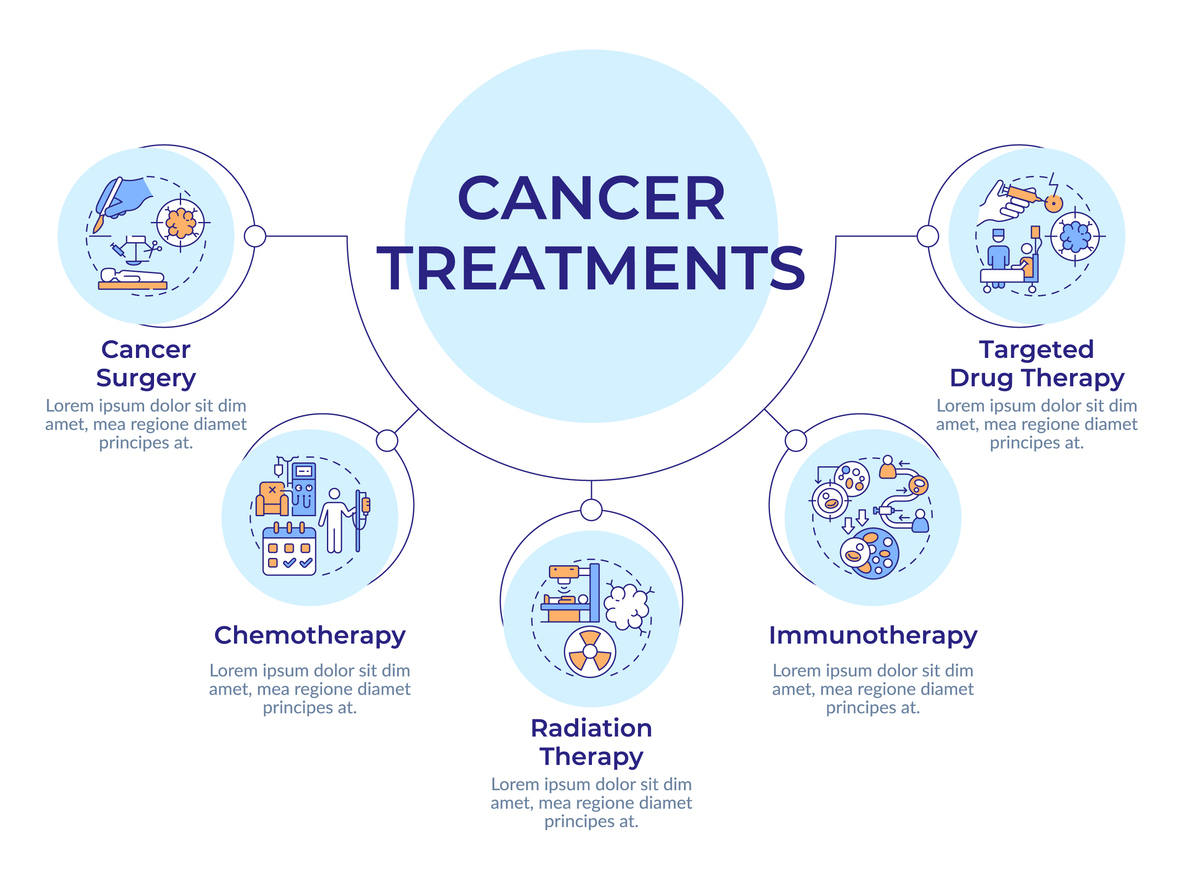
For generations, the primary weapons against cancer were surgery, radiation and chemotherapy.
Those treatments still save countless lives.
But today, physicians have additional tools that can attack cancer in entirely different ways.
Targeted Therapy
Rather than simply attacking rapidly dividing cells, some newer medications target specific proteins or molecular changes that help certain cancers grow and spread.
In some cases, physicians can test a tumor for particular biomarkers and select a treatment designed specifically for that target.
Immunotherapy
This may be one of the most fascinating advances in cancer treatment.
Our immune systems are designed to recognize and destroy abnormal cells.
But cancer cells sometimes develop ways to hide from—or suppress—the immune system.
Some immunotherapies help remove those barriers, allowing the body's own immune system to recognize and attack cancer more effectively.
For certain patients and certain cancers, that approach has transformed treatment.
Precision Medicine
Increasingly, physicians aren't simply asking:
"Where did this cancer start?"
They're also asking:
"What is driving this particular cancer?"
Information about the genes, proteins and other characteristics of a person's tumor can sometimes help physicians choose treatments more precisely.
It's becoming less about treating a cancer...
And more about treating your cancer.
Cancer by the Numbers
There is still an enormous amount of work to do.
But it's important to recognize how much progress has already been made.
- The overall U.S. cancer death rate has declined since the early 1990s.
- The American Cancer Society reports a 34% decline from the peak cancer death rate in 1991 through 2023.
- That decline represents an estimated 4.8 million cancer deaths avoided.
- There are now targeted therapies approved for numerous types of cancer.
- Immunotherapy is being used to treat many different cancers, and researchers continue studying why some patients respond while others don't.
We haven't "cured cancer."
But millions of people are alive because we've gotten better at preventing, detecting and treating it.
That's extraordinary progress.
So Why Does Early Detection Still Matter?
This is the question at the heart of this entire series.
If treatment keeps getting better, why are we so focused on finding cancer earlier?
Because even the most advanced cancer treatment has a better opportunity when physicians have more options.
A small cancer confined to one location presents a very different treatment challenge from cancer that has spread to several parts of the body.
Modern medicine can do remarkable things.
But we shouldn't ask medicine to fight the hardest possible battle if we have an opportunity to find disease sooner.
Better treatment and earlier detection aren't competing strategies.
We need both.
The Future Is Incredibly Promising
Researchers continue working on new immunotherapies.
New targeted treatments.
Cancer vaccines.
Better ways to predict which patients will respond to which treatments.
More precise radiation.
Less invasive surgery.
Better genetic and biomarker testing.
And treatments designed to cause less damage to healthy tissue while attacking cancer more effectively.
We don't know what cancer treatment will look like 10 or 20 years from now.
But if the last few decades are any indication, there is every reason for hope.
Until then, one of our greatest advantages remains remarkably simple:
Time.
Why Early Detection Matters
At Virtual Imaging, we believe the best time to find cancer is before it causes symptoms.
Many cancers develop quietly without causing pain or obvious warning signs. During that time, finding certain cancers earlier may provide more treatment options and improve outcomes.
While no screening test can detect every cancer—or guarantee a specific outcome—appropriate screening and early detection remain powerful tools in modern medicine.
That's why we're passionate about helping people take a proactive approach to their health.
Because when it comes to cancer...
Earlier is almost always better.
Take the First Step
You can't control your genetics.
You can't stop yourself from getting older.
You can't eliminate every environmental risk.
But you can choose to be proactive.
Advanced imaging isn't about expecting bad news.
It's about replacing uncertainty with information.
Sometimes that information provides tremendous peace of mind.
Sometimes it identifies a problem that needs further evaluation.
Either outcome gives you and your healthcare provider information you didn't have before.
At Virtual Imaging, our mission is simple:
To help people take a proactive approach to their health through advanced imaging and informed decisions.
Because Time Matters
Cancer is one of the diseases where time can make an enormous difference.
We can't prevent every cancer.
We can't predict who will develop it.
But in many cases, finding cancer earlier can improve the options available for treating it.
That's why Virtual Imaging exists.
Because when it comes to cancer...
Earlier is almost always better.