
What If You Found Cancer Before It Found You?
Valerie S. 4-5 minutes, 7.22.23
Imagine being told you have cancer.
Now imagine hearing one more sentence.
"We found it early."
Those four words can change everything.
For many cancers, the stage at diagnosis is the single greatest predictor of survival. A tumor discovered while it's still confined to one organ is often highly treatable. The same cancer found after it has spread throughout the body may be far more difficult to cure.
That's why early detection isn't just about finding cancer—it's about finding it while time is still on your side.
The Earlier Cancer Is Found, the Better the Odds
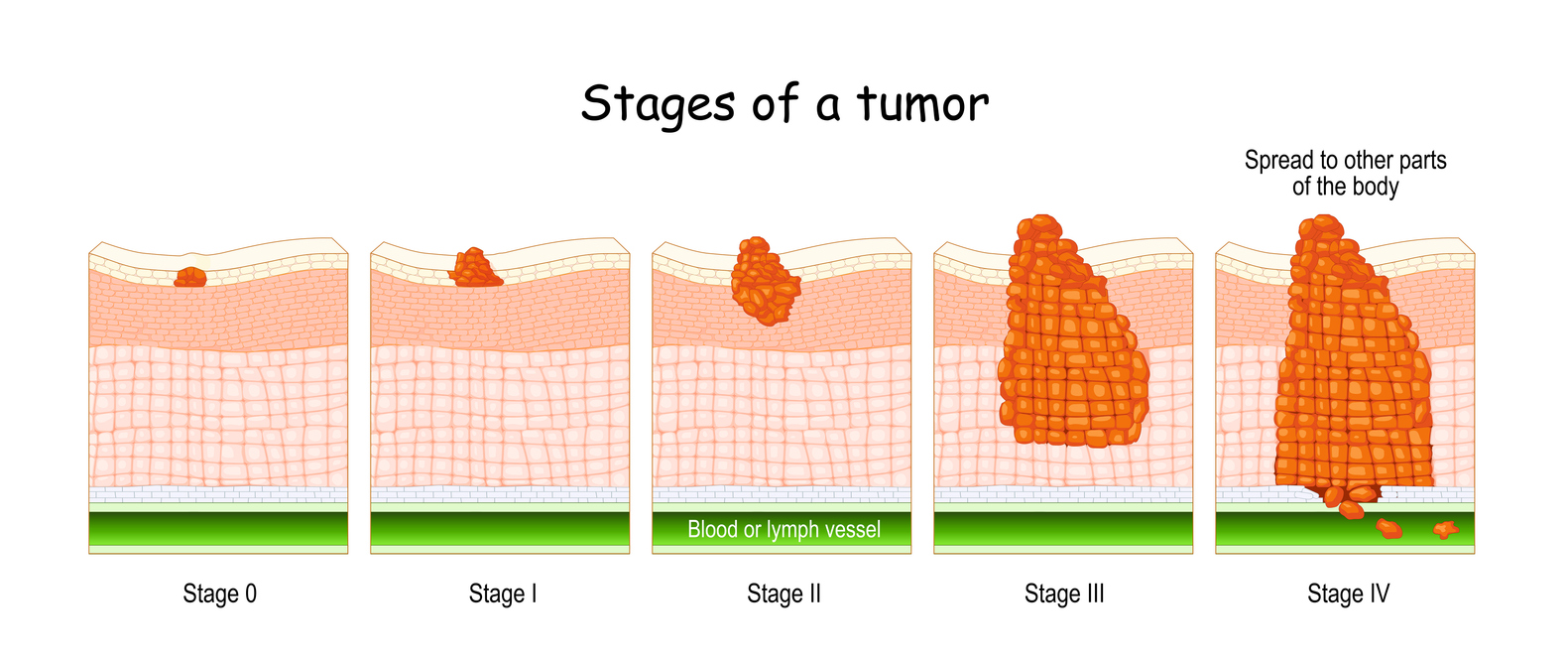
Cancer staging describes how far a cancer has spread.
· Stage I: Small, localized tumor
· Stage II: Larger tumor but still largely confined
· Stage III: Spread to nearby lymph nodes or tissues
· Stage IV: Cancer has spread to distant organs (metastatic disease)
Across nearly every major type of cancer, survival rates decline dramatically as the stage advances.
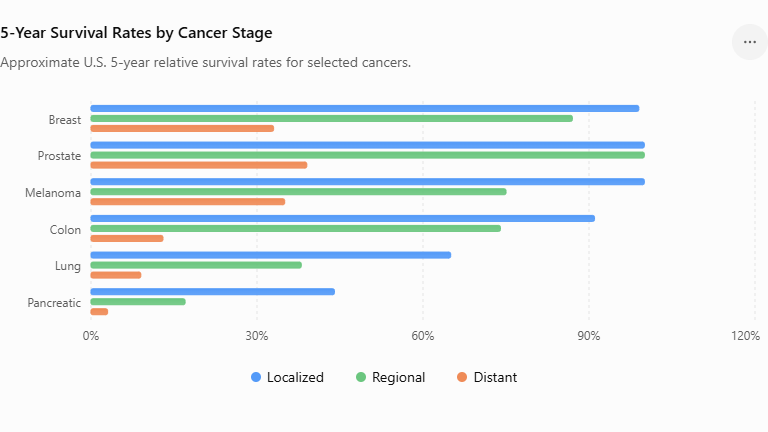
Here are some examples.
Cancer Survival Rates by Stage
Cancer Type Early Stage (Localized) Regional Spread Stage IV / Distant
| Cancer Type | Early Stage (Localized) | Regional Spread | Stage 4/Distant |
|---|---|---|---|
| Breast | 99%+ | 87% | 33% |
| Prostate | Nearly 100% | Nearly 100% | 39% |
| Melanoma | About 100% | 75% | 35% |
| Colon | 91% | 74% | 13% |
| Lung | 65% | 38% | 9% |
| Pancreatic | 44% | 17% | 3% |
Approximate 5-year relative survival rates based on American Cancer Society and National Cancer Institute SEER data.
Why So Many Cancers Are Found Too Late
The challenge is that many dangerous cancers produce few or no symptoms in their earliest stages.
People often feel perfectly healthy while a small tumor quietly grows.
By the time symptoms such as pain, weight loss, fatigue, coughing blood, jaundice, or changes in bowel habits appear, the disease may already be more advanced.
This is why physicians recommend screening tests for cancers such as breast, colon, cervical, prostate, and lung in people who meet established screening guidelines.

_______________________________________________________________________________________________________________________________________________
Knowledge Can Change the Story
The statistics tell a consistent story:
A cancer discovered before it spreads is often far more treatable than one found after symptoms appear.
While no test can guarantee perfect health, knowing what's happening inside your body today may give you more treatment options tomorrow.
At Virtual Imaging, we've been helping Georgians take a proactive approach to their health for more than 15 years. As a locally owned imaging center, we believe that information empowers better decisions—and sometimes, it can save lives.
If you're interested in learning whether a preventive CT scan is right for you, our experienced team is happy to answer your questions and explain what whole-body CT can—and cannot—detect.
Because when it comes to cancer, the goal isn't just finding it.
It's finding it early enough to change the outcome.
This article is for educational purposes only and should not be considered medical advice. Always discuss your individual risk factors and screening recommendations with your healthcare provider.